


Mahjong Breeze - Tile Match
Passion Fruit Joy
I found Mahjong Breeze - Tile Match most appealing in the moments when I wanted a game that asked very little from me. It is a casual tile-matching game from Passion Fruit Joy, built around a familiar Mahjong-style activity rather than a complicated adventure, story, or competitive system. I could open it, focus on the board, clear a few matches, and stop without feeling that I had abandoned a larger task.
That simple rhythm is the main reason I would recommend it to someone who enjoys quiet puzzle games. The game is free, rated for Everyone, and available for devices running Android 8.0 or later. Its current version is 1.0.4, and it has already passed the 100K-install mark with a 4.9 average from around 3.7K ratings. Those figures suggest that its straightforward approach is connecting with a broad audience, although popularity alone does not make every puzzle game a good fit.
Why Mahjong Breeze works so well in short sessions
The first thing I noticed is how quickly the game gets to the point. There is no need to learn a complicated control scheme or understand a long explanation before making the first move. The central action is recognizable: look across the arrangement, identify matching tiles, and make selections carefully. That low entry barrier makes the game comfortable for someone who has not played many mobile puzzles.
I think this is especially useful when attention is divided. If I have a few quiet minutes while waiting for an appointment, or want something gentle after a busy day, I do not need to prepare mentally for Mahjong Breeze. The game gives me a visual task that is more engaging than simply scrolling, but less demanding than a strategy game that expects constant planning.
The presentation also suits its name. The overall feeling is calmer than the rapid-fire style used by many match-three games. Instead of encouraging frantic swipes and immediate chains, Mahjong Breeze rewards looking closely. That difference matters for older players and for anyone who prefers deliberate play. The Everyone age rating reinforces that accessible positioning, though younger players who want action or spectacle may find the pace too restrained.
Related News






The strongest quality here is short-session clarity: I can understand what I am doing almost immediately, and the game does not need a long commitment to feel worthwhile. That makes it easier to recommend than many casual games that begin simply but soon bury the player under currencies, missions, timers, or layered menus.
A board that encourages attention rather than speed
Tile matching looks easy until the board becomes visually busy. The useful skill is not merely spotting two identical symbols; it is scanning the arrangement methodically and noticing which choices are available. I found it helpful to check the outer areas first, then move inward, rather than tapping randomly and hoping the board would solve itself.
That small habit is one of the practical advantages of playing on a phone. Mahjong Breeze can turn a short break into a concentration exercise without feeling like formal training. I would not describe it as a deep brain-training product, but it does reward visual patience and a consistent search pattern. Players who rush may create unnecessary difficulty for themselves, while players who pause before selecting tend to get more satisfaction from each board.
Gallery
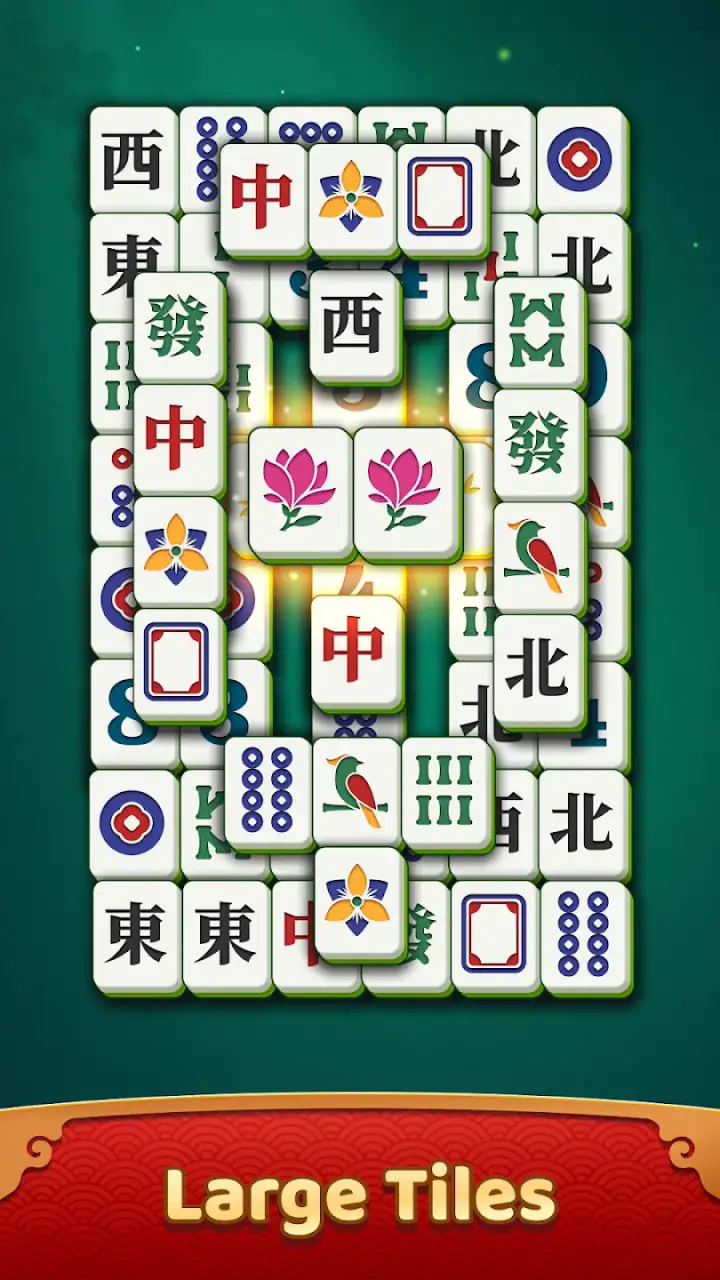
The game is also a reasonable choice for a shared household device. Because the basic idea is familiar, I could imagine a parent, grandparent, or casual player picking it up without needing a detailed tutorial from someone else. The accessibility is not only about age; it is about reducing the amount of game knowledge required before the first enjoyable moment.
How the session rhythm compares with other casual puzzles
Compared with match-three games, Mahjong Breeze feels less explosive and less dependent on building a chain of effects. Match-three alternatives are often better when I want bright feedback, quick combinations, and a stronger sense of momentum. Mahjong Breeze is better when I want to observe the board and make one considered decision at a time.
Compared with word games, it removes the pressure of vocabulary. I do not have to remember spelling, search for a clue, or worry about whether I know a particular subject. Compared with solitaire, it offers a more visual matching challenge, although players who enjoy card strategy may miss the distinct tactical identity of a card hand.
That comparison points to the game’s real audience. I would choose it over a busier casual title when I want a quiet puzzle with a familiar structure. I would choose something else when I need a stronger sense of progression, a story, competitive rankings, or a more dramatic reward loop. Mahjong Breeze is not trying to be all of those things, and its restraint is both its advantage and its limitation.
Returning after an interruption
A casual game earns my trust when it handles interruptions gracefully. Phones are rarely used in perfect conditions: a message arrives, someone calls, or I simply need to put the device down. Mahjong Breeze fits the kind of play where stopping halfway through a session feels natural rather than disastrous. I can treat it as a small activity instead of an appointment that demands uninterrupted concentration.
This is important for older players and anyone who prefers a relaxed pace. A game that punishes every pause can turn a soothing puzzle into a source of irritation. Here, the appeal comes from being able to return to the board and resume the same visual task without needing to remember a complicated sequence of actions.
My practical advice is to avoid opening it when I am genuinely rushed. Even though individual play can be brief, the board still benefits from attention. If I tap while distracted, I am more likely to overlook a useful match or make a move without considering the remaining layout. The game tolerates interruption better than it tolerates careless scanning, which is a fair trade for this type of puzzle.
Why the pause-friendly design matters
Many casual games use short sessions as a reason to push constant urgency. They may give the player only a narrow window, fill the screen with competing objectives, or make every return feel like a demand to catch up. Mahjong Breeze has a more comfortable identity because the basic pleasure comes from the board itself.
That makes it suitable for a few specific everyday situations. I could play it while waiting for water to boil, during a quiet commute when I am seated, or before bed when I want something more focused than browsing but less stimulating than an action game. I would not play while walking or doing another task, because matching tiles still requires visual attention and a phone screen should not compete with real-world awareness.
For a senior player, the ability to settle into a familiar pattern may be more important than novelty. For a younger player, the same quality may feel repetitive unless the board arrangement keeps presenting a satisfying challenge. The game therefore works best when the player values calm concentration over constant surprise.
What can make returning less satisfying
The same simplicity that makes the game easy to resume can reduce the feeling of discovery. If I return expecting a large new system, a story development, or a major change in how the game works, I may be disappointed. The pleasure is incremental: another board, another careful scan, another successful set of matches.
This is where I see the clearest friction. Mahjong Breeze is easy to understand, but that also means the game has fewer layers to pull me back when the basic activity stops feeling fresh. Players who need daily objectives, character collection, social competition, or a long-term campaign should look toward a different casual game.
Still, I would not call the lack of complexity a flaw by itself. For some players, added systems are not depth; they are clutter. The right question is whether I want a puzzle to become a hobby with many obligations or remain a small, repeatable break. Mahjong Breeze makes more sense in the second role.
Replay value and the limits of repetition
Replay value here comes from the matching process rather than from a narrative that changes each time. I can return because I enjoy the visual search, the moment when a crowded arrangement becomes clearer, and the quiet satisfaction of finishing a board. That is a valid kind of replay value, but it depends heavily on how much I enjoy the core action.
I found that my own mood affected the experience. When I wanted to slow down, repeated boards felt comforting. When I wanted a stronger challenge, the same calm structure could feel too familiar. This makes the game particularly good as a background companion for routine breaks, but less convincing as the only game on my phone.
A useful way to extend its life is to change how I approach each board. Instead of tapping the first obvious pair, I can scan for moves that open more of the arrangement, prioritize less visible tiles, and leave myself a clear view of the remaining options. This does not transform the game into a strategy title, but it gives the familiar activity a more deliberate layer.
Another good routine is to play in focused bursts rather than forcing a long session. After several boards, the visual patterns can start to blend together. Stopping while the game still feels pleasant helps preserve its role as a refreshing break. That is a small but important trade-off: Mahjong Breeze is more enjoyable when I use it as a snack-sized puzzle than when I demand hours of variety from it.
Who will appreciate the repetition
I would recommend it to people who like predictable controls, readable goals, and a peaceful pace. It is a particularly sensible choice for a senior who wants a simple tile game, for a casual player who dislikes complicated menus, or for someone looking for a free puzzle to fill short gaps in the day.
The game may also suit players who are returning to mobile gaming after a long break. There is no need to learn a fictional universe or understand a competitive meta before enjoying the central activity. That makes the first session less intimidating and lowers the chance that the player will abandon it because the game feels like work.
On the other hand, I would skip it if my priority is constant novelty. Fans of fast match-three action, word challenges, card tactics, or puzzle games with elaborate progression will probably find more variety elsewhere. I would also avoid making it my main choice if I want multiplayer interaction or a strong sense of personal achievement beyond clearing boards.
Small habits that improve the experience
Scan the board in a consistent direction instead of jumping randomly between tiles. This reduces the chance of overlooking an available pair.
Pause before selecting an obvious match. A moment of observation can reveal a better move and keep the remaining layout easier to read.
Use it as a planned short break rather than an endless scrolling replacement. The game’s calm repetition is more pleasant when the session has a natural stopping point.
Keep the screen at a comfortable viewing angle, especially if the game is being used by an older player. Tile matching depends on visual clarity, so comfort affects enjoyment more than it might in a purely audio-based game.
These habits are not hidden modes or advanced systems; they are ways of getting more from the board that is already there. That distinction matters because Mahjong Breeze does not need complicated mechanics to reward a more thoughtful approach. Its depth is modest, but its basic interaction can still become more satisfying with better attention.
My casual verdict
After spending time with Mahjong Breeze - Tile Match, I see it as a focused comfort game rather than a broad entertainment package. Passion Fruit Joy has chosen a familiar format and kept the emphasis on accessible tile matching. The result is easy to start, easy to understand, and well suited to players who want a quiet activity that can fit around daily interruptions.
The 4.9 average across around 3.7K ratings and more than 100K installs gives it a strong reception among the people who have tried it. I would treat that as encouraging rather than conclusive: a high rating cannot tell me whether the game will provide enough variety for a player who needs constant progression. Its free price makes trying it straightforward, and the Everyone rating makes it broadly approachable.
My recommendation is strongest for short sessions. If I have a few minutes and want to focus my eyes and hands on something calm, this is a good option. If I need a game that can carry a long evening with evolving goals, social features, or a dramatic difficulty curve, I would choose a different title in the casual category.
Mahjong Breeze is at its best when I stop expecting it to be more than a peaceful tile puzzle. It offers immediate pleasure through clear matching, handles the stop-and-start nature of phone use well, and provides enough replay value for players who genuinely enjoy the process. Its repetition will not suit everyone, but for the right player, that repetition is precisely the point.
With its current version, 1.0.4, and support for Android 8.0 and later, it is an approachable free game for a relaxed routine. I would recommend giving it a try if you want a gentle Mahjong-style experience, especially for waiting rooms, quiet evenings, or a few minutes between ordinary tasks. Just keep your expectations aligned: this is a small, steady puzzle companion, not a large game designed to constantly surprise you.
FAQs for Mahjong Breeze - Tile Match
What is Mahjong Breeze - Tile Match, and how is it played?
Mahjong Breeze - Tile Match is a casual puzzle game based on the classic mahjong solitaire format. You clear the board by matching identical, available tiles in pairs. A tile is usually available when it is not covered and has space on at least one side. The goal is to remove every tile while planning your moves carefully and avoiding situations where no useful pairs remain.
Is Mahjong Breeze - Tile Match free to download and play?
The game can generally be downloaded and played for free, making it easy to try without an upfront purchase. However, free mobile puzzle games may include optional advertisements, rewarded videos, or in-app purchases for hints, boosters, extra lives, or other conveniences. Before downloading, check the current store listing for the exact monetization details, because features and pricing can change with updates.
Does Mahjong Breeze - Tile Match require an internet connection?
Many tile-matching games can be played offline, which is useful when traveling or when mobile data is limited. Nevertheless, certain functions may need an internet connection, including advertisements, cloud synchronization, analytics, events, updates, or purchases. If offline play is important to you, test the game after disabling Wi-Fi and mobile data, and remember that progress may not synchronize until you reconnect.
Is Mahjong Breeze - Tile Match suitable for beginners and casual players?
Yes, the matching rules are simple enough for beginners to understand after only a short tutorial or a few introductory levels. The relaxing presentation and gradually increasing board difficulty make it suitable for short sessions and casual play. More experienced puzzle fans may also enjoy the challenge of finding efficient matches, managing limited moves, and completing layouts without relying heavily on hints.
Are there hints, boosters, or accessibility options in the game?
Mahjong Breeze - Tile Match may provide helpful tools such as hints, shuffles, or other assistance when the board becomes difficult, although the exact options can depend on the current version. These tools can make the game more approachable, but they may be limited or connected to advertisements and purchases. Players should also review the game settings for sound, vibration, notifications, and visual preferences.
Pros
- Relaxing gameplay suitable for short or extended sessions.
- Simple controls make it accessible for beginners.
- Large variety of tile layouts keeps matches feeling fresh.
- Offline play is convenient when no internet is available.
- Gentle visuals and sound create a calm gaming atmosphere.
Cons
- Some levels may feel repetitive after extended play.
- Hints or boosters can reduce the challenge for experienced players.
- Small tile symbols may be harder to distinguish on compact screens.
- Progression may rely on completing several similar boards.
- Ads can interrupt the experience between levels.


